Punjab Kisan Card Recovery Deadline 2026: Complete Guide to Loan Repayment, Penalties & Eligibility Rules
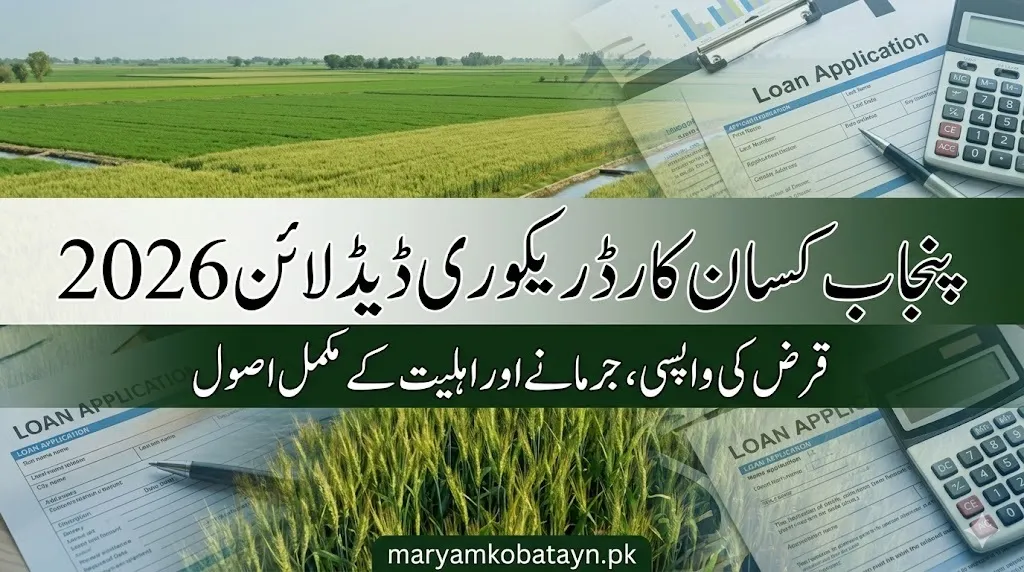
Punjab Government has issued an important warning regarding Kisan Card loan recovery before 31 May 2026. Learn repayment rules, interest penalties, Kisan Card blocking policy, subsidy eligibility, and how farmers can avoid disqualification from future schemes.
Punjab Kisan Card Recovery Deadline 2026 – Complete Guide for Farmers
The Government of Punjab has issued an important warning for farmers regarding the repayment of loans obtained through the Punjab Kisan Card Scheme. According to the official notice issued by the Punjab Agriculture Department, farmers must repay their outstanding Kisan Card dues before 31 May 2026 to avoid penalties, disqualification from future schemes, and permanent blocking of their Kisan Cards.
The announcement has created significant attention among farmers across Punjab because the Kisan Card program is one of the largest agricultural support initiatives launched for the farming community in Pakistan.
This detailed guide explains everything farmers need to know about the Punjab Kisan Card recovery deadline, repayment rules, penalties, future eligibility, and how the scheme impacts the agricultural sector.
What Is the Punjab Kisan Card Scheme?
The Punjab Kisan Card Scheme is a farmer support initiative launched by the Punjab Government to provide financial assistance, subsidies, and interest-free agricultural loans to farmers.
The scheme aims to modernize agriculture and improve crop productivity by helping farmers purchase:
- Seeds
- Fertilizers
- Pesticides
- Agricultural machinery
- Diesel and fuel
- Other farming inputs
The Kisan Card operates through the Bank of Punjab and allows farmers to access financial support through ATM facilities and designated agricultural channels.
The scheme was designed to reduce the financial burden on small and medium-scale farmers and improve agricultural sustainability in Punjab.
Punjab Government’s Latest Warning for Kisan Card Holders
The latest official warning clearly states that farmers who fail to repay their Kisan Card dues before 31 May 2026 may face serious consequences.
The government has emphasized that timely repayment is necessary to maintain eligibility for future benefits and avoid penalties.
The notice specifically mentions four major consequences for non-payment:
- Daily interest charges on used loan amounts
- Ineligibility for future interest-free loans
- Disqualification from future government subsidies and schemes
- Permanent blocking of the Kisan Card
This warning reflects the government’s effort to improve loan recovery and maintain the sustainability of agricultural financing programs.
Kisan Card Recovery Deadline 2026

What Is the Last Date for Loan Repayment?
According to the official notice, farmers must repay their outstanding Kisan Card loan amount by:
31 May 2026
Failure to clear dues before this deadline may result in penalties and restrictions.
Farmers are advised to immediately verify their outstanding balance and arrange repayment to avoid complications.
Penalties for Not Repaying Kisan Card Loans
One of the most important aspects of the government notice is the list of penalties that farmers may face.
Let’s examine these consequences in detail.
1. Daily Interest Charges on Outstanding Amount
The government notice clearly states that daily interest will be imposed on the utilized loan amount if repayment is not completed before the deadline.
This means farmers who previously benefited from interest-free financing may start paying additional financial charges after the due date.
Why This Is Important
Interest accumulation can significantly increase the total payable amount over time.
Small farmers already struggling with rising farming costs may face additional financial pressure due to:
- Fertilizer price increases
- Fuel costs
- Weather-related crop losses
- Market instability
Timely repayment can help farmers avoid unnecessary financial burden.
2. Ineligibility for Future Interest-Free Loans
Another major penalty is disqualification from future interest-free agricultural loans.
The Punjab Government regularly introduces loan programs to support farmers during crop seasons.
Farmers who default on their Kisan Card repayment may lose access to future financing opportunities.
This could affect their ability to:
- Purchase quality seeds
- Buy fertilizers
- Invest in machinery
- Manage seasonal farming expenses
For many farmers, losing access to interest-free loans can severely impact agricultural productivity.
3. Disqualification from Government Subsidies and Schemes
The notice also warns that loan defaulters may become ineligible for:
- Government subsidy programs
- Agricultural relief packages
- Farmer welfare schemes
- Subsidized fertilizers
- Solar tube well schemes
- Free tractor programs
- Other agricultural incentives
This is one of the most serious consequences because government support programs play a critical role in reducing farming costs.
4. Permanent Blocking of Kisan Card
Perhaps the strongest warning in the notice is the permanent blocking of the Kisan Card.
If a farmer’s card is blocked:
- ATM access may stop
- Future transactions may become impossible
- Government financial support could be restricted
- Access to subsidy systems may end
This could disrupt financial planning for farmers who depend on agricultural credit facilities.
Why the Punjab Government Is Strict About Loan Recovery
The government’s strict recovery policy is connected to the sustainability of agricultural financing programs.
Interest-free loan schemes require continuous recovery to ensure funds are available for future farming seasons.
If large numbers of farmers fail to repay loans:
- Government budgets become strained
- New applicants may not receive support
- Financial institutions face operational difficulties
- Agricultural financing systems weaken
The recovery process helps maintain stability within the agricultural support ecosystem.
Importance of the Kisan Card for Punjab Farmers
The Kisan Card has become an essential financial tool for farmers across Punjab.
Key Benefits of the Kisan Card
Easy Access to Agricultural Loans
Farmers can obtain financial assistance without lengthy traditional banking procedures.
Subsidy Access
The card helps farmers receive government subsidies directly.
ATM Withdrawal Facility
The card can be used through Bank of Punjab ATM systems.
Financial Inclusion
Small farmers gain formal access to financial services.
Better Agricultural Productivity
Access to funds allows farmers to improve crop management and yields.
Role of Bank of Punjab in the Kisan Card Program
The official notice also references the Bank of Punjab ATM facility.
The Bank of Punjab plays a major operational role in:
- Issuing Kisan Cards
- Managing loan disbursement
- Processing repayments
- ATM withdrawal services
- Financial transaction management
Farmers can often use Bank of Punjab channels to check balances and repay dues.
How Farmers Can Check Their Outstanding Loan Balance
Farmers should verify their loan status immediately.
Possible methods include:
- Visiting Bank of Punjab branches
- Using ATM services
- Contacting the Agriculture Department helpline
- Checking official government portals
- Consulting local agriculture offices
Keeping updated records is important to avoid accidental default.
How to Repay Kisan Card Loans
The repayment process may involve:
- Visiting a designated Bank of Punjab branch
- Using ATM payment options
- Depositing the required amount
- Obtaining a payment receipt
- Confirming updated account status
Farmers should preserve repayment receipts for future verification.
Punjab Agriculture Department Helpline
The official helpline mentioned in the notice is:
0800-17000
Farmers can contact the helpline for:
- Loan information
- Outstanding balance details
- Complaint registration
- Technical guidance
- Repayment instructions
- Scheme eligibility clarification
Impact of Loan Default on Farmers
Loan default can create long-term financial difficulties for farmers.
Financial Pressure
Interest charges can increase debt burden.
Loss of Future Support
Farmers may miss important subsidy opportunities.
Reduced Agricultural Productivity
Lack of financing may reduce crop quality and yield.
Banking Restrictions
Blocked cards can limit financial transactions.
Economic Instability
Agricultural families may face income insecurity.
Why Timely Repayment Is Beneficial
Repaying loans on time provides several advantages.
Continued Access to Government Schemes
Eligible farmers remain qualified for future programs.
Better Financial Reputation
Timely repayment improves credibility with financial institutions.
Avoidance of Interest Penalties
Farmers save money by avoiding daily interest.
Easier Future Loan Approval
Good repayment history increases future eligibility.
Challenges Faced by Farmers in Loan Repayment
Many farmers face genuine difficulties in repaying agricultural loans.
Rising Input Costs
Prices of fertilizers, pesticides, and fuel continue to increase.
Climate Change and Weather Problems
Floods, droughts, and heatwaves affect crop production.
Market Price Instability
Crop prices fluctuate frequently.
Water Shortages
Irrigation problems reduce productivity.
Limited Profit Margins
Small-scale farmers often earn limited profits after expenses.
These challenges highlight the importance of balanced recovery policies.
Government Support Programs for Farmers in Punjab
Punjab Government has introduced several agricultural support initiatives.
These include:
- Subsidized fertilizers
- Interest-free loans
- Kisan Card Scheme
- Solar tube well programs
- Mechanization support
- Seed subsidy schemes
- Crop insurance initiatives
Maintaining repayment discipline helps ensure these programs continue operating effectively.
Economic Importance of Agriculture in Punjab
Punjab is considered the agricultural backbone of Pakistan.
The province contributes significantly to:
- Wheat production
- Rice exports
- Cotton farming
- Sugarcane production
- Livestock development
Millions of people depend directly or indirectly on agriculture for income.
Supporting farmers through financial programs remains essential for economic stability.
Digital Agriculture and Financial Modernization
The Kisan Card program represents a move toward digital agriculture management.
Benefits of digital financial systems include:
- Transparent transactions
- Reduced corruption
- Faster subsidy delivery
- Better financial monitoring
- Improved farmer records
Digital systems can help modernize Pakistan’s agricultural economy.
Future of the Punjab Kisan Card Scheme
If managed efficiently, the Kisan Card system can evolve further.
Potential future improvements include:
- Mobile app integration
- Online balance checking
- Digital subsidy tracking
- Crop insurance integration
- Smart farming support systems
- AI-based agricultural recommendations
The long-term success of the program depends on cooperation between farmers and authorities.
Expert Advice for Farmers
Agricultural experts generally recommend:
- Monitoring loan deadlines carefully
- Maintaining repayment records
- Using loans strictly for agricultural purposes
- Avoiding unnecessary borrowing
- Seeking government guidance when needed
Proper financial management can help farmers maximize scheme benefits.
Common Mistakes Farmers Should Avoid
Ignoring Government Notices
Farmers should stay informed about deadlines and policy updates.
Delaying Repayment
Late repayment can increase financial burden.
Losing Payment Receipts
Documentation is essential for dispute resolution.
Depending on Unofficial Information
Farmers should only trust official government announcements.
SEO FAQs About Punjab Kisan Card Recovery 2026
What is the Punjab Kisan Card Recovery Deadline 2026?
The Punjab Government has set 31 May 2026 as the deadline for repayment of outstanding Kisan Card dues.
What happens if farmers do not repay Kisan Card loans?
Farmers may face:
- Daily interest charges
- Permanent card blocking
- Disqualification from future loans
- Ineligibility for government schemes
Will interest be charged after the deadline?
Yes, daily interest may be applied to outstanding loan amounts after the deadline.
Can a blocked Kisan Card be reactivated?
Farmers should contact the Agriculture Department or Bank of Punjab for guidance regarding blocked cards.
Which bank manages the Punjab Kisan Card?
The Bank of Punjab manages the Kisan Card financial system.
What is the official helpline number for Kisan Card support?
The helpline number is 0800-17000.
Can farmers still apply for future schemes after default?
Loan defaulters may become ineligible for future government subsidy programs and interest-free loans.
Is the Kisan Card only for Punjab farmers?
Yes, the scheme is specifically designed for eligible farmers in Punjab.
Why is the government enforcing strict recovery rules?
The government wants to ensure the sustainability of agricultural financing programs.
How can farmers avoid penalties?
Farmers should repay outstanding dues before 31 May 2026.
Conclusion
The Punjab Kisan Card Recovery Deadline 2026 is an important issue for farmers across the province. The government has clearly warned that failure to repay dues before 31 May 2026 can result in serious financial and administrative consequences.
Farmers who benefited from the Kisan Card Scheme should take immediate steps to verify outstanding balances and complete repayments on time.
The Kisan Card program remains one of Punjab’s most important agricultural support initiatives, helping farmers access financing, subsidies, and modern agricultural resources.
Timely repayment will not only protect farmers from penalties but also ensure continued eligibility for future government schemes and financial assistance programs.
By maintaining financial discipline and staying informed about official updates, farmers can continue benefiting from Punjab’s evolving agricultural support system.