
BISP Kafalat Program Increase 2026 – Huge 24% Boost in Cash Aid, Full Details & Payment Update
BISP Kafalat Program increase brings a major 24.14% rise in quarterly cash assistance to Rs. 18,000. Learn full details, eligibility, timeline, and latest updates.
BISP Kafalat Program Increase – Complete 2026 Guide to New Payment & Eligibility Updates
Introduction: What is the BISP Kafalat Program Increase?
The BISP Kafalat Program increase is one of the most significant welfare updates announced in Pakistan’s social protection system. It is designed to support low-income families struggling with rising inflation and economic pressure.
This program is operated under the national welfare initiative Benazir Income Support Programme, which provides quarterly financial assistance to eligible households across the country.
The latest update introduces a major rise in cash support, making it a crucial development for millions of beneficiaries.
What is the BISP Kafalat Program Increase?
The BISP Kafalat Program increase refers to the government’s decision to raise the quarterly cash assistance amount under the Kafalat scheme.
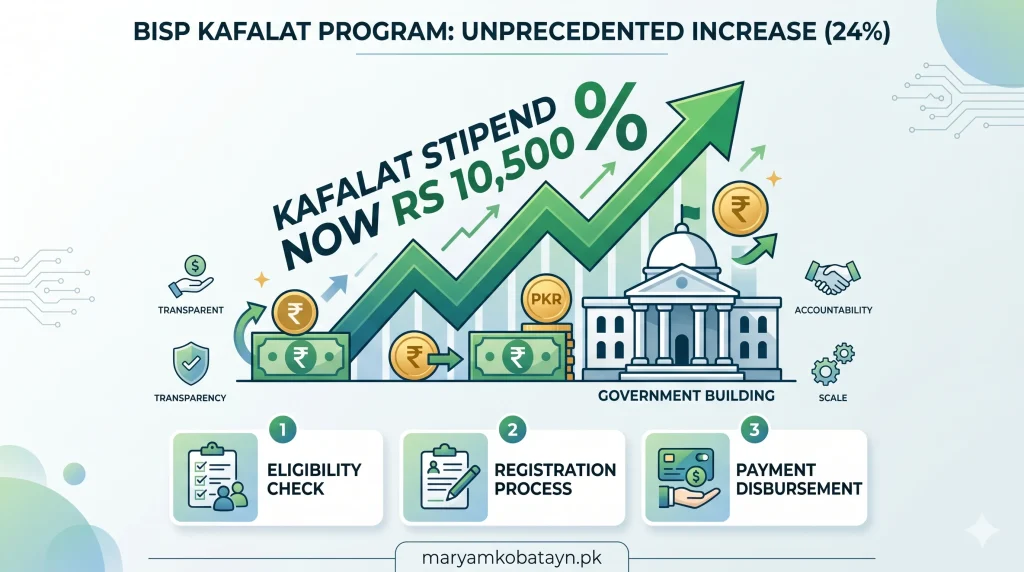
Key highlights include:
- Increased financial support for poor families
- Adjustment based on inflation trends
- Expansion of beneficiary coverage
- IMF-approved fiscal adjustment plan
This reform aims to improve household purchasing power and reduce financial stress among vulnerable groups.
New Payment Structure (Old vs New Update)
The updated payment structure under the BISP Kafalat Program increase is as follows:
- Previous amount: Rs. 14,500 per quarter
- New amount: Rs. 18,000 per quarter
- Increase: Approximately 24.14%
This is one of the largest single adjustments in recent years, showing a strong policy shift toward social protection.
Reasons Behind the Increase
Several key economic and policy factors contributed to this decision:
- Rising inflation in essential goods
- Pressure on low-income households
- IMF-backed fiscal reforms
- Government’s social welfare expansion strategy
- Need for improved poverty alleviation measures
The increase is not just financial—it is also part of a broader economic stabilization plan.
Implementation Timeline
The new rates will not take effect immediately.
- Effective date: January 2027
- Transition period: Gradual adjustment phase
- Existing payments will continue until implementation
This timeline ensures financial stability while shifting to the new structure.
Beneficiary Expansion Plan
Alongside the payment increase, the government has also announced expansion:
- 200,000 new families will be added
- Total coverage will exceed 10 million households
- Improved outreach in rural areas
This expansion strengthens the impact of the BISP Kafalat Program increase nationwide.
Government & IMF Coordination
The government has formally assured the International Monetary Fund that:
- Budgetary space is available
- Social protection will remain protected
- Inflation-based adjustments will continue
- Program transparency will be improved
This coordination ensures long-term sustainability of the program.
Economic Impact of the Program
The BISP Kafalat Program increase is expected to bring several positive outcomes:
- Reduced financial burden on poor families
- Increased spending on food and education
- Improved access to healthcare
- Strengthening of rural economies
- Reduction in extreme poverty levels
Overall, it acts as a direct cash support mechanism for economic relief.
Eligibility Criteria
To qualify for the program, applicants must meet the following conditions:
- Must belong to a low-income household
- Valid CNIC issued by NADRA
- Registered in national poverty database
- Pass NSER survey assessment
- Not employed in government service
Registration Process
New applicants can join the program through:
- Visiting nearest BISP registration center
- Completing NSER household survey
- Providing CNIC and family details
- Verification through biometric system
Once approved, beneficiaries are added to the payment system.
Payment Collection Methods
Beneficiaries can receive payments through multiple channels:
- ATM withdrawals using BISP card
- Designated cash centers
- Authorized retail agents
These methods ensure easy access for remote and urban families.
Transparency & Digital Reforms
To improve efficiency, the program uses:
- Biometric verification systems
- Digital payment tracking
- Database integration with NADRA
- Complaint resolution systems
These reforms help reduce fraud and ensure fair distribution.
Challenges in Implementation
Despite improvements, some challenges remain:
- Payment delays in rural regions
- System overload during disbursement
- Fraudulent agent activity in some areas
- Awareness gaps among beneficiaries
Before vs After Comparison
| Feature | Before | After Increase |
|---|---|---|
| Quarterly Payment | Rs. 14,500 | Rs. 18,000 |
| Coverage | Lower | Expanded |
| Inflation Adjustment | Limited | Improved |
| Beneficiary Support | Moderate | Strong |
FAQs – BISP Kafalat Program Increase
1. What is the BISP Kafalat Program increase?
It is the rise in quarterly cash assistance for eligible families under Pakistan’s welfare system.
2. How much is the new payment?
The new payment is Rs. 18,000 per quarter.
3. When will the increase start?
It will be implemented from January 2027.
4. How many families will benefit?
Around 200,000 additional families will be included.
5. Who is eligible for the program?
Low-income households registered in the national database.
6. How can payments be collected?
Through ATMs, cash centers, and authorized agents.
Conclusion
The BISP Kafalat Program increase represents a major step forward in Pakistan’s social welfare system. By raising financial assistance and expanding coverage, the government aims to reduce poverty and support vulnerable families more effectively.
This update strengthens long-term economic stability while ensuring that the poorest segments of society receive meaningful support during inflationary pressures.