Punjab Launches AI-Driven Security Command Center to Strengthen Provincial Threat Monitoring PIFTAC
The Government of Punjab has taken a major step toward modernizing its internal security framework. A new province-level intelligence coordination center has been launched to improve how information is collected, analyzed, and shared among law enforcement agencies.
This move signals a shift toward data-driven decision-making. By combining technology, real-time monitoring, and inter-department coordination, the province aims to respond to security challenges more effectively.
The initiative reflects a broader strategy to strengthen public safety through digital systems rather than relying only on traditional field operations.
Why Punjab Needed a Central Intelligence Platform
Security threats today are more complex than before. Challenges such as organized crime, cyber risks, and cross-regional criminal networks require faster coordination between agencies.
In the past, departments often worked separately. This sometimes led to delays in intelligence sharing. A centralized platform reduces these gaps by:
- Bringing multiple departments under one operational structure
- Allowing real-time data exchange
- Supporting evidence-based risk assessment
- Improving communication during emergencies
Instead of reacting late, the system is designed to detect early warning signals.
How the New System Works
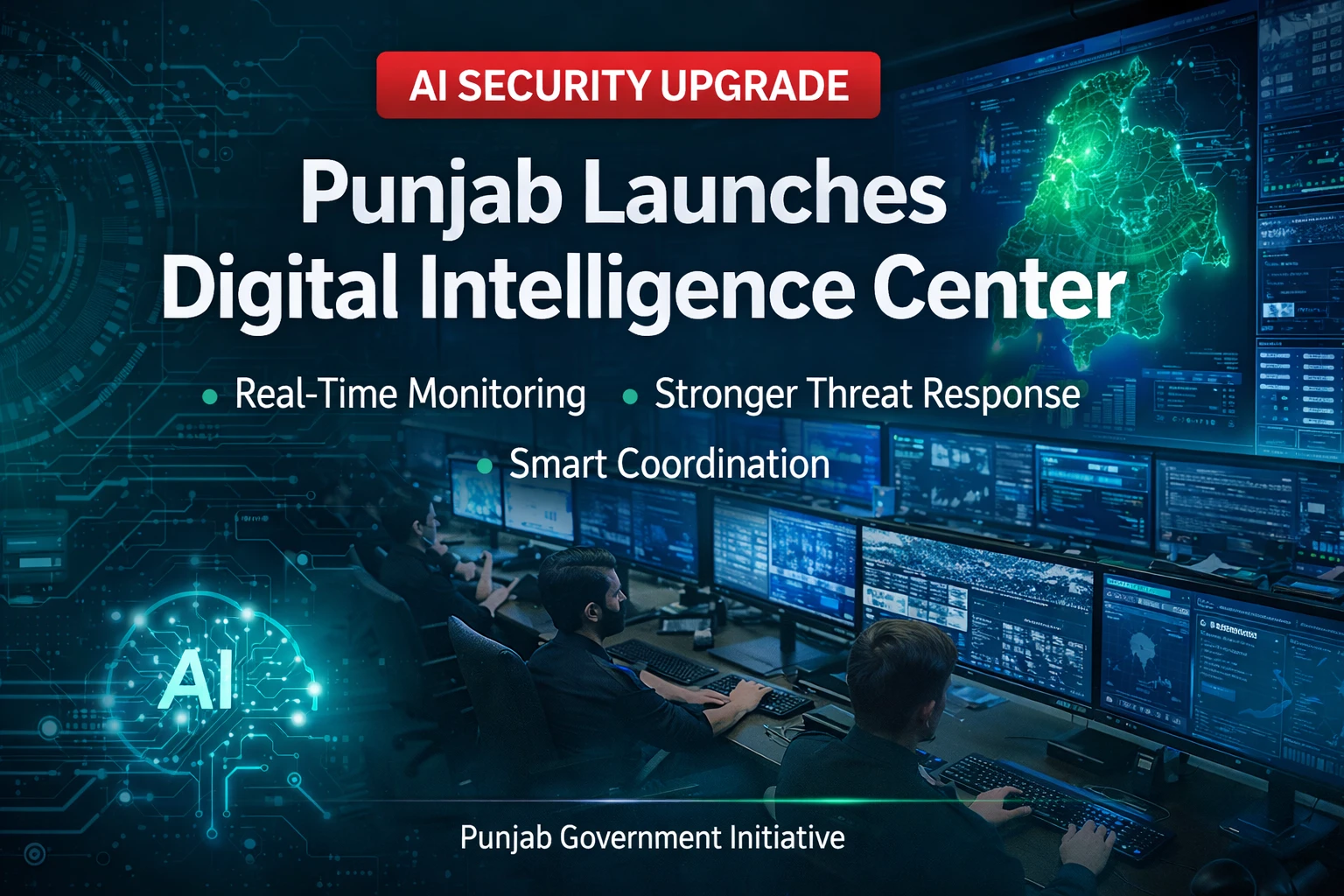
The newly launched center functions as a command and coordination hub. It gathers information from various sources, processes it through digital tools, and provides actionable insights to relevant authorities.
Key Operational Features
1. Real-Time Data Integration
Data from surveillance systems, field reports, and digital platforms is collected and analyzed in one place.
2. Artificial Intelligence Support
AI tools help identify patterns, detect unusual activity, and flag potential threats before they escalate.
3. Inter-Agency Collaboration
Police, counter-terror departments, and other security units can access shared intelligence dashboards.
4. Central Monitoring Facility
A digital control room allows officers to track developments across districts.
This approach shifts focus from manual reporting to intelligent monitoring.
Expansion of Counter-Terror Units Across Divisions
In addition to the central intelligence facility, the provincial leadership has approved the creation of specialized counter-terror units at the divisional level.
This means that instead of relying only on central command, each division will have trained teams equipped to respond quickly to security incidents.
Benefits of Divisional Units
- Faster response times
- Local-level intelligence collection
- Better coordination with district police
- Improved community-level awareness
The goal is to ensure that no region is left without rapid operational support.
The Role of Artificial Intelligence in Security
Artificial intelligence is becoming a powerful tool in global security systems. Punjab’s new model includes AI-based analytics to enhance threat detection.
What AI Can Do in This System
- Analyze large amounts of data within seconds
- Detect suspicious digital patterns
- Support predictive risk assessment
- Reduce human error in monitoring
AI does not replace officers. Instead, it assists them by providing deeper insights.
This makes the security structure more proactive rather than reactive.
Strengthening Digital Surveillance and Monitoring
Modern threats often involve digital communication and technology-based coordination. That is why the new system emphasizes digital surveillance tools.
Upgraded monitoring methods include:
- Advanced camera integration
- Smart data dashboards
- Secure information sharing platforms
- Digital record management
Such improvements help authorities track developments more accurately.
Focus on Long-Term Security Reform
This initiative is not just about launching a facility. It represents a long-term strategy for restructuring how intelligence operations function in Punjab.
The broader objectives include:
- Building institutional capacity
- Training officers in digital tools
- Improving accountability through data tracking
- Establishing standardized reporting mechanisms
Sustainable reform requires consistent upgrades and continuous evaluation.
Public Safety and Community Impact
A stronger intelligence network directly impacts citizens. When agencies coordinate better, communities feel safer.
Expected outcomes include:
- Faster response to threats
- Reduced organized crime activity
- Better emergency management
- Stronger prevention mechanisms
While results may take time to become fully visible, the foundation has now been laid for a more integrated security environment.
Governance and Oversight
For any large-scale security initiative, transparency and responsible oversight are essential.
Authorities have indicated that the system will operate under defined legal frameworks and institutional checks. This helps maintain balance between security measures and civil rights.
Technology-driven systems must always follow lawful procedures and ethical standards.
What This Means for Punjab’s Future
Punjab is aligning itself with global trends in digital governance. Many advanced countries now use integrated intelligence hubs to manage security risks.
By adopting similar models, the province aims to:
- Improve operational efficiency
- Reduce duplication of efforts
- Strengthen preventive security strategies
- Modernize administrative infrastructure
The combination of technology, trained personnel, and structured coordination creates a stronger safety network.
Challenges to Watch
While the initiative is promising, successful implementation depends on several factors:
- Continuous technical upgrades
- Skilled staff training
- Strong cybersecurity protections
- Effective inter-agency cooperation
Without proper execution, even advanced systems may underperform. Long-term commitment is key.
Conclusion
Punjab’s new AI-enabled intelligence and threat coordination center marks an important milestone in the province’s security modernization journey. By centralizing intelligence operations, expanding divisional response units, and integrating advanced technology, the government aims to build a safer and more responsive environment.
This initiative reflects a shift toward smart governance, where digital tools support decision-making and law enforcement efforts.
If implemented effectively, it can reshape how security management works across the province for years to come.
Frequently Asked Questions (FAQs)
1. What is the purpose of the new intelligence center in Punjab?
The center aims to centralize intelligence gathering, improve coordination among agencies, and enhance threat detection using digital tools.
2. How will artificial intelligence help in security operations?
AI analyzes large data sets quickly, identifies unusual patterns, and supports predictive risk assessments.
3. Will new counter-terror units be established outside the capital?
Yes, specialized response units are planned at the divisional level to improve regional readiness.
4. Is this system only focused on terrorism?
No. It is designed to handle multiple security challenges, including organized crime and digital threats.
5. How does this benefit ordinary citizens?
Better coordination and faster response times contribute to improved public safety and more secure communities.