
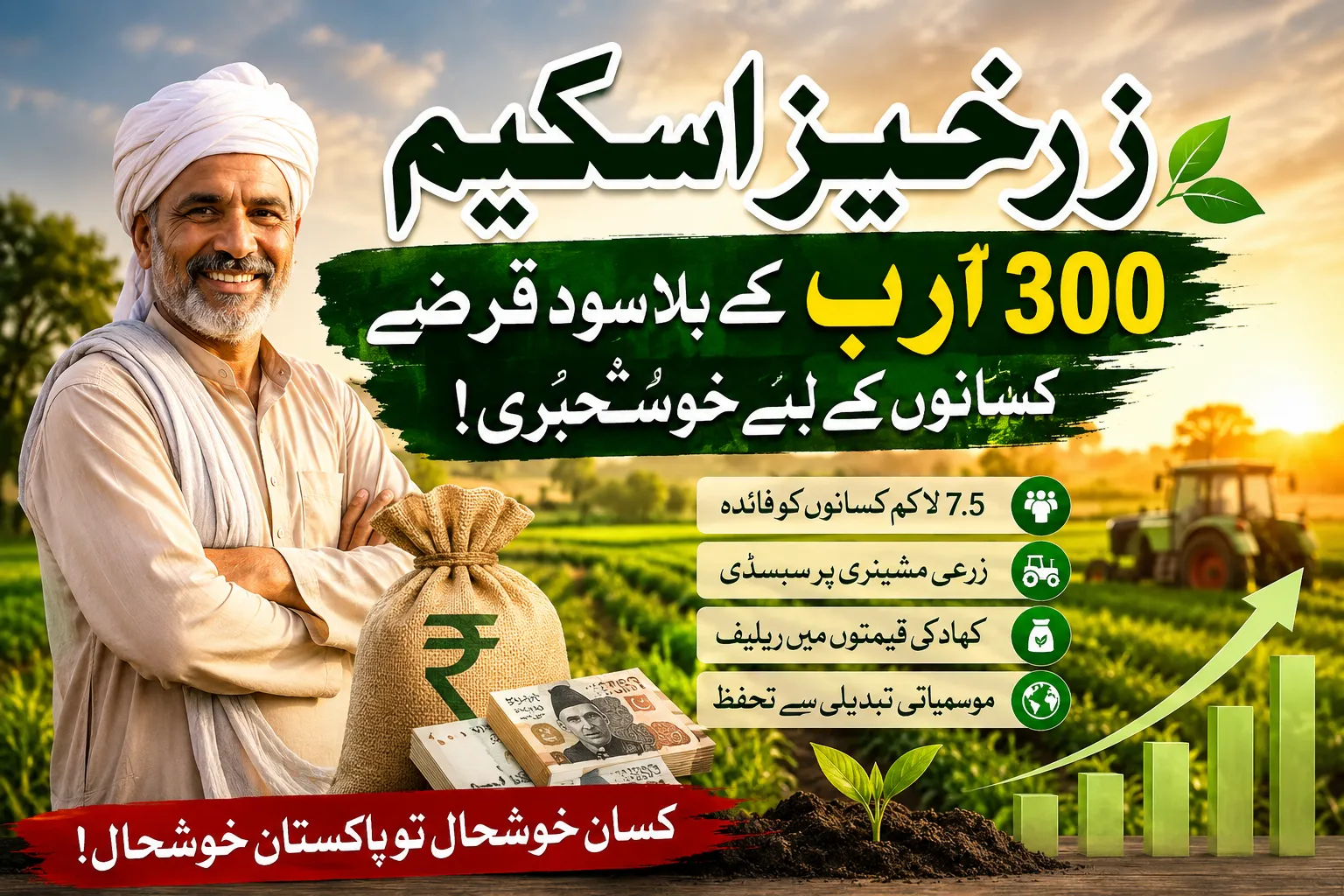
Rs300 Billion Interest-Free Loans for 750,000 Farmers Under Zarkhaiz Scheme
Pakistan’s Budget 2026-27 introduces the Zarkhaiz Scheme, offering Rs300 billion in interest-free loans to 750,000 small farmers. Learn how agricultural subsidies, machinery support, fertilizer incentives, and climate resilience funding could transform Pakistan’s farming sector.
Pakistan Introduces Rs300 Billion Interest-Free Loan Program for Farmers
Pakistan’s federal government has announced a major agricultural support package in the Budget 2026-27, unveiling the Zarkhaiz Scheme, a landmark initiative aimed at strengthening the country’s agricultural sector and improving financial access for small-scale farmers.
Under the scheme, approximately 750,000 small farmers across Pakistan will receive interest-free loans totaling Rs300 billion, enabling them to invest in seeds, fertilizers, irrigation systems, farm equipment, and other essential agricultural inputs without the burden of financing costs.
The announcement comes at a crucial time when rising input costs, climate-related challenges, and declining profit margins continue to pressure Pakistan’s farming community.
Key Highlights of the Zarkhaiz Scheme
The newly announced agricultural package contains several components designed to support farmers and increase agricultural productivity:
| Initiative | Allocation |
|---|---|
| Interest-Free Loans (Zarkhaiz Scheme) | Rs300 Billion |
| Agricultural Machinery Subsidy | Rs5 Billion |
| Per Acre Subsidy for Small Farmers | Rs1,500 per acre |
| Fertilizer Industry Support Package | Rs20 Billion |
| Climate Resilience Funding | $200 Million |
| Balochistan Agricultural Tube Wells | Rs3 Billion |
| Prime Minister Youth Business & Agriculture Program | Rs20 Billion |
The government believes these measures will help improve crop yields, increase rural incomes, and strengthen food security nationwide.
Why Pakistan’s Agricultural Sector Needs Urgent Support
Agriculture remains one of the largest contributors to Pakistan’s economy, employing millions of people directly and indirectly. The sector contributes significantly to GDP and plays a vital role in exports, food production, and rural livelihoods.
However, farmers have faced numerous challenges in recent years:
- Rising fertilizer prices
- Increased diesel and energy costs
- Water scarcity
- Climate change impacts
- Limited access to affordable credit
- Low mechanization levels
- Supply chain inefficiencies
Many small farmers rely on informal lending sources that often charge extremely high interest rates. The introduction of interest-free agricultural financing could reduce dependency on costly borrowing and improve profitability.
How Interest-Free Agricultural Loans Could Transform Farming
One of the biggest obstacles facing small-scale farmers is access to affordable capital. Traditional bank loans often require collateral and involve complicated approval procedures.
The Zarkhaiz Scheme seeks to address these barriers by providing:
Easier Access to Working Capital
Farmers can purchase:
- Certified seeds
- Fertilizers
- Pesticides
- Farm machinery
- Irrigation equipment
without immediately worrying about financing costs.
Improved Agricultural Productivity
Access to timely financing allows farmers to invest at the right stage of the crop cycle, leading to:
- Better yields
- Higher crop quality
- Reduced production losses
- Increased farm profitability
Financial Inclusion for Rural Communities
The scheme could bring thousands of previously unbanked farmers into the formal financial system, improving access to future agricultural services and support programs.
Agricultural Machinery Subsidy: Boosting Farm Mechanization
The government has allocated Rs5 billion in subsidies for agricultural machinery.
Pakistan’s agricultural sector continues to lag behind many regional competitors in terms of mechanization. Modern machinery can significantly improve efficiency by reducing labor costs and increasing operational speed.
Potential beneficiaries include farmers seeking to acquire:
- Tractors
- Harvesters
- Seed drills
- Laser land levelers
- Sprayers
- Irrigation equipment
Enhanced mechanization could improve productivity while reducing post-harvest losses.
Direct Subsidy for Small Farmers
The budget also proposes a subsidy of Rs1,500 per acre for farmers owning less than 12 acres of land.
This measure specifically targets smallholders, who represent a large portion of Pakistan’s agricultural workforce.
Benefits include:
- Reduced cultivation costs
- Improved purchasing power
- Increased crop investment
- Better resilience against market fluctuations
By focusing on smaller landowners, policymakers aim to ensure equitable distribution of agricultural support.
Fertilizer Support Package: Can It Lower Input Costs?
The government has introduced a Rs20 billion package for fertilizer manufacturing companies to stabilize fertilizer prices and ensure consistent supply.
This move comes amid concerns regarding:
- Rising global commodity prices
- Supply chain disruptions
- Increasing production costs
However, many farmer organizations argue that the benefits of the package must directly translate into lower retail prices for essential fertilizers such as:
DAP Fertilizer
Diammonium Phosphate (DAP) remains one of the most important fertilizers for crop growth.
Urea Fertilizer
Urea is widely used across Pakistan’s agricultural sector and significantly influences crop productivity.
Farmers continue to demand immediate reductions in DAP and urea prices, arguing that high fertilizer costs remain one of the largest contributors to increasing production expenses.
Climate Change and Agricultural Resilience
Climate change poses a growing threat to Pakistan’s agricultural economy.
The government has allocated $200 million in collaboration with the World Bank to strengthen agricultural resilience against climate-related risks.
Key focus areas may include:
- Drought management
- Flood resilience
- Climate-smart agriculture
- Sustainable irrigation
- Water conservation
- Crop diversification
Recent extreme weather events have highlighted the urgent need for climate adaptation strategies across the agricultural sector.
Special Support for Balochistan Agriculture
Balochistan has historically faced water shortages and irrigation challenges.
To address these concerns, the government has earmarked Rs3 billion for agricultural tube wells in the province.
Potential benefits include:
- Improved irrigation access
- Enhanced crop production
- Greater agricultural sustainability
- Better rural livelihoods
This targeted investment reflects the importance of region-specific agricultural solutions.
Prime Minister Youth Business and Agriculture Program
An additional Rs20 billion has been allocated to support youth entrepreneurship and agricultural development.
The initiative aims to encourage young Pakistanis to participate in:
- Agribusiness
- Agricultural technology
- Food processing
- Rural startups
- Smart farming solutions
Youth involvement is increasingly viewed as essential for modernizing Pakistan’s agricultural landscape.
Farmers’ Concerns: Is the Relief Package Enough?
While the budget announcements have been welcomed by many stakeholders, farmer groups continue to express concerns regarding rising production costs.
Their primary demands include:
Reduction in Fertilizer Prices
Farmers argue that subsidies for manufacturers should result in immediate reductions in market prices.
Affordable Energy Costs
Electricity and diesel prices significantly affect irrigation and transportation expenses.
Improved Water Management
Many agricultural regions continue to experience water shortages and inefficient irrigation infrastructure.
Faster Loan Disbursement
The success of the Zarkhaiz Scheme will depend heavily on transparent and efficient implementation.
Economic Impact of the Zarkhaiz Scheme
If implemented effectively, the scheme could generate positive economic outcomes, including:
Increased Agricultural Output
Better financing and input access can improve crop productivity nationwide.
Enhanced Food Security
Higher production levels may strengthen Pakistan’s food supply chain.
Rural Economic Growth
Additional investment in agriculture could stimulate economic activity in rural areas.
Employment Generation
Agricultural expansion often creates jobs across farming, logistics, processing, and retail sectors.
Challenges That Could Affect Implementation
Despite its potential, several challenges remain:
- Administrative bottlenecks
- Loan distribution transparency
- Identification of eligible beneficiaries
- Monitoring and accountability
- Inflationary pressures
- Regional disparities
Addressing these issues will be critical for achieving the intended outcomes.
What Success Would Look Like
For the Zarkhaiz Scheme to become a transformative agricultural initiative, policymakers will need to ensure:
- Fair distribution of funds
- Timely loan disbursement
- Effective monitoring systems
- Farmer awareness campaigns
- Strong collaboration with financial institutions
- Continued support for fertilizer affordability
Success could position the scheme as one of Pakistan’s most significant agricultural interventions in recent years.
Future Outlook for Pakistan’s Agriculture Sector
The Budget 2026-27 signals a stronger commitment to agricultural development than previous years. Combined with climate resilience measures, machinery subsidies, youth-focused programs, and interest-free financing, the government’s strategy appears aimed at creating a more sustainable and productive agricultural economy.
However, long-term success will depend on implementation, accountability, and continued engagement with farmers to address evolving challenges.
As Pakistan navigates food security concerns, climate change risks, and economic pressures, the Zarkhaiz Scheme represents both an opportunity and a test of the country’s ability to modernize and strengthen its agricultural sector.
Frequently Asked Questions (FAQs)
What is the Zarkhaiz Scheme?
The Zarkhaiz Scheme is a government initiative announced in Pakistan’s Budget 2026-27 that provides Rs300 billion in interest-free loans to small farmers.
How many farmers will benefit from the scheme?
Approximately 750,000 small farmers across Pakistan are expected to benefit.
Are the loans completely interest-free?
Yes, according to the budget announcement, the loans will be provided on an interest-free basis.
What other agricultural subsidies were announced?
The government announced machinery subsidies, fertilizer support packages, per-acre subsidies, climate resilience funding, and youth agriculture initiatives.
Why are farmers still concerned despite the package?
Farmers remain concerned about rising DAP and urea fertilizer prices, which continue to increase production costs.
How does the scheme support climate resilience?
A $200 million allocation, supported by the World Bank, aims to strengthen climate adaptation and agricultural resilience programs.
Conclusion
The launch of Pakistan’s Rs300 billion Zarkhaiz Scheme marks a significant policy shift toward supporting small farmers and revitalizing the agricultural sector. While interest-free financing, machinery subsidies, and climate resilience investments provide promising opportunities, stakeholders will closely watch how effectively these measures are implemented. If executed efficiently, the initiative could improve productivity, strengthen food security, enhance rural incomes, and contribute to sustainable agricultural growth across Pakistan.