nsis.navttc.gov.pk NAVTTC Free Technical Training Program 2026 For Matric Pass
Pakistan launches a free technical training initiative through NAVTTC and SMAP to prepare youth for jobs in the salt industry. Learn about eligibility, course duration, training locations, skills offered, career opportunities, and how this program can help build a successful future in mining, packaging, quality control, and international trade.
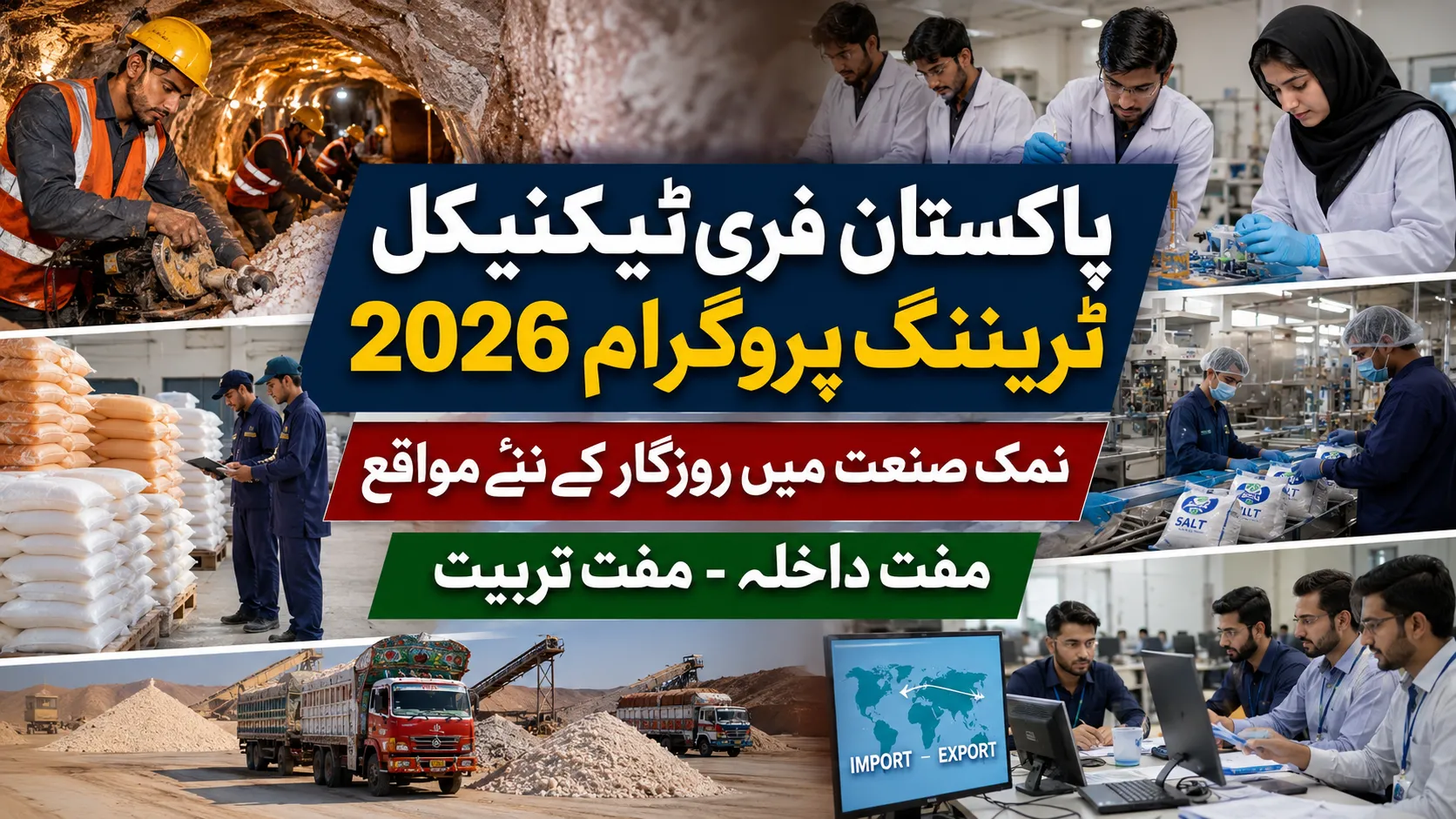
Pakistan Free Technical Training Program 2026: NAVTTC Announces Salt Industry Skills Courses for Youth
Pakistan continues to invest in youth development through skills training and employment-focused programs. One of the latest initiatives is a free technical training program launched through the collaboration of the National Vocational and Technical Training Commission (NAVTTC) and the Salt Manufacturing Association of Pakistan (SMAP).
This program is designed to provide practical industry skills that can help young people find jobs, start businesses, and contribute to Pakistan’s growing industrial sector. The training focuses on the salt industry, one of Pakistan’s most important natural resource sectors.
The initiative is supported under the Prime Minister’s Youth Program (PMYP) and aligns with the broader goals of economic growth, workforce development, and export enhancement.
In this article, we will explore the details of the training program, its benefits, eligibility requirements, career opportunities, and the importance of skill development in Pakistan.
Why Technical Skills Are Important in Pakistan
Pakistan has a young population with millions of people entering the workforce every year. While many young individuals complete their education, they often face challenges in finding employment due to a lack of practical skills.
Technical and vocational education helps bridge this gap by providing hands-on training that employers need. Industries today require workers who understand modern processes, quality standards, safety procedures, and international business practices.
Programs such as the NAVTTC-SMAP training initiative are important because they connect training directly with industry requirements. This increases the chances of employment after course completion.
Overview of the Free Training Program
The free technical training program aims to prepare participants for careers in the salt mining and salt processing sectors.
Pakistan is home to some of the world’s largest salt reserves, including the famous Khewra Salt Mine. The salt industry has significant potential for local employment and export growth.
The training covers four specialized areas:
1. Mining Techniques for Salt Extraction
Participants learn how salt is extracted safely and efficiently from mines. The course introduces modern mining methods, workplace safety, equipment handling, and production management.
Key topics include:
- Salt mining operations
- Safety regulations
- Extraction techniques
- Equipment usage
- Resource management
These skills are valuable for individuals seeking employment in mining companies and industrial operations.
2. Salt Packaging and Quality Control
Packaging and quality control play a major role in ensuring products meet market standards.
Participants learn:
- Packaging methods
- Product handling
- Quality inspection
- Industry standards
- Hygiene and safety practices
Companies increasingly require workers who can maintain product quality for both domestic and international markets.
3. Value Addition and By-Product Development
Modern industries focus on creating value-added products rather than selling raw materials.
This training teaches participants how to:
- Improve product value
- Develop new salt-based products
- Increase profitability
- Explore industrial applications
- Understand market trends
Value-added products often generate higher income and improve export competitiveness.
4. Import Export Documentation
International trade is a growing sector in Pakistan.
The course helps participants understand:
- Export procedures
- Import regulations
- Trade documentation
- Shipping requirements
- Customs processes
- International business communication
These skills can open opportunities in logistics, trade companies, export firms, and business operations.
Training Locations
The program is available in multiple locations to improve accessibility for participants.
Training centers are located in:
- Chakwal
- Qaidabad
- Karachi
These locations have been selected to support industrial growth and provide opportunities to youth from different regions.
Eligibility Criteria
One of the biggest advantages of this initiative is its broad eligibility requirements.
Educational Qualification
Applicants must have:
- Matriculation (Matric)
- Intermediate (FA, FSC, ICS, ICOM or equivalent)
This makes the program accessible to a large segment of the population.
Age Limit
Applicants between:
18 to 40 years
can apply.
The wide age range allows both young graduates and working adults to participate.
Course Duration
The training program duration is:
3 Months
This short-term format helps participants quickly gain industry-relevant skills and enter the job market.
Many vocational programs focus on practical learning, enabling trainees to develop job-ready competencies within a limited timeframe.
Benefits of Joining the Program
Free Training
Participants do not need to pay tuition fees, making the program accessible regardless of financial background.
Industry-Oriented Curriculum
The training content is designed according to industry needs, increasing employability.
Practical Experience
Hands-on learning allows trainees to apply concepts in real-world situations.
Employment Opportunities
The skills gained can help participants secure jobs in:
- Mining companies
- Salt processing facilities
- Export firms
- Logistics companies
- Quality assurance departments
Entrepreneurship Potential
Participants may also use their knowledge to start small businesses related to packaging, processing, or trading.
PECTTA 8th class registration portal for exams 2026-27 https://maryamkobatayn.pk/grade-8-pesrp-edu-pk-student-registration-for-examination-2026-through-online-portal/
Importance of Pakistan’s Salt Industry
Pakistan possesses significant salt reserves and is recognized internationally for the quality of its natural salt products.
The industry contributes to:
- Employment generation
- Export earnings
- Industrial development
- Regional economic growth
With increasing global demand for mineral products and specialty salt items, skilled workers are becoming more important than ever.
Training programs like this help create a workforce capable of supporting future industry expansion.
Career Opportunities After Training
Completing the program can lead to several career paths.
Mining Technician
Mining technicians support extraction operations and ensure safety standards are followed.
Quality Control Assistant
Quality control professionals inspect products and maintain compliance with standards.
Packaging Specialist
Packaging specialists ensure products are properly prepared for distribution and export.
Export Documentation Officer
These professionals handle trade paperwork and coordinate international shipments.
Production Assistant
Manufacturing facilities often require trained personnel who understand industrial processes.
Small Business Owner
Entrepreneurial participants can explore opportunities in packaging, processing, or distribution.
How Skills Training Supports Economic Growth
Vocational education has a direct impact on national economic development.
When workers gain practical skills:
- Productivity improves
- Employment rates increase
- Businesses grow faster
- Export competitiveness strengthens
- Poverty levels can decline
Countries that invest in technical education often experience stronger industrial performance and workforce readiness.
Pakistan’s focus on demand-driven skills development reflects a broader effort to prepare citizens for modern economic challenges.
Role of NAVTTC in Skill Development
The National Vocational and Technical Training Commission (NAVTTC) plays a leading role in promoting vocational education across Pakistan.
NAVTTC works to:
- Develop industry-relevant courses
- Improve workforce quality
- Support youth employment
- Strengthen technical institutions
- Encourage entrepreneurship
Through partnerships with industry associations, NAVTTC ensures training programs remain aligned with labor market needs.
Why Industry Partnerships Matter
Many traditional education systems struggle to match employer requirements.
Industry partnerships help solve this problem by:
- Identifying skill shortages
- Designing relevant curricula
- Providing practical insights
- Increasing job placement opportunities
The collaboration between NAVTTC and SMAP is an example of how education and industry can work together for mutual benefit.
How to Apply
Interested candidates can apply online through the NAVTTC registration portal
Before applying, applicants should prepare:
- Educational documents
- CNIC details
- Contact information
- Recent photographs (if required)
Applicants should also ensure they submit their applications before the stated deadline.
Final Thoughts
The NAVTTC and SMAP free technical training program represents a valuable opportunity for Pakistani youth and working adults who want to build practical skills and improve their career prospects.
With specialized training in salt mining, quality control, packaging, value addition, and import-export documentation, participants can gain knowledge that is directly connected to industry demand.
As Pakistan continues to invest in workforce development, programs like this play a vital role in creating employment opportunities, strengthening industries, and supporting economic growth.
For individuals looking to improve their future through skill development, this initiative offers a practical pathway toward professional success.