
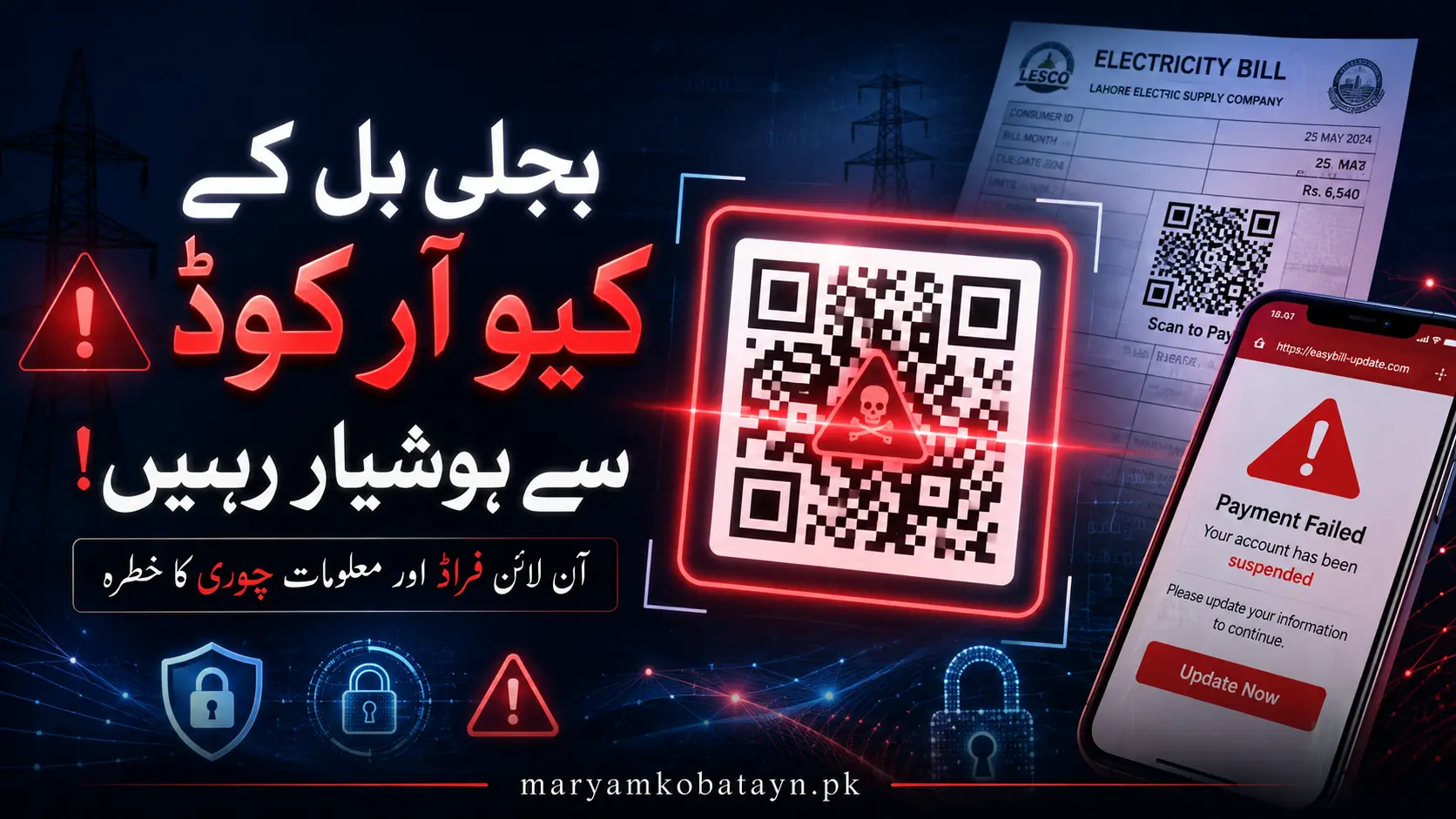
QR Code Scam Alert in Pakistan: Power Division Advisory, Phishing Risks, and How to Stay Safe
Learn about the latest QR code scam advisory issued by Pakistan’s Power Division. Discover how phishing attacks on electricity bill users work, why OTP sharing is dangerous, and how to protect your personal data from cyber fraud.
Introduction: Rising QR Code Scams in Electricity Bills
In recent months, a new type of cyber fraud has been targeting electricity consumers in Pakistan. According to a security advisory issued by the Power Division, Pakistan, criminals are misusing QR codes and fake online links to steal users’ personal and financial information.
These scams often appear harmless at first glance—such as a QR code printed on an electricity bill or a message claiming eligibility for subsidy or bill relief. However, once scanned, users are redirected to fraudulent websites designed to collect sensitive data like identity details, banking information, and one-time passwords (OTPs).
What Is the QR Code Electricity Bill Scam?
The QR code scam is a form of phishing attack, where cybercriminals trick users into voluntarily sharing confidential information.
How the scam typically works:
- A user scans a QR code on a bill or receives one via SMS or WhatsApp.
- The QR code redirects them to a fake website that looks similar to an official electricity provider portal.
- The user is asked to enter personal details such as:
- CNIC number
- Mobile number
- Billing details
- The site then requests a 6-digit OTP (One-Time Password).
- Once entered, scammers gain access to accounts or use the data for financial fraud.
Why OTP (6-Digit Code) Is Extremely Dangerous
The 6-digit OTP is one of the most sensitive pieces of digital security information. It is usually used to verify:
- Banking transactions
- Mobile wallet logins
- SIM card verification
- Government service registrations
Key warning:
Sharing your OTP is equivalent to giving direct access to your account. No bank, government department, or utility company will ever ask for it through calls, messages, or QR links.
Common Types of QR Code and Electricity Bill Scams
Cybercriminals are using multiple strategies to deceive users:
1. Fake Subsidy Offers
Messages claiming:
- “You are eligible for electricity subsidy”
- “Click here to claim bill discount”
These are designed to attract low-income households.
2. Fake Bill Payment Portals
Users are redirected to cloned websites that look like official billing systems.
3. Social Media QR Codes
Fraudulent QR codes shared on Facebook, WhatsApp groups, or SMS.
4. Customer Support Impersonation
Scammers pose as electricity company representatives and ask for verification codes.
Official Advisory and Safety Guidelines
The Power Division has clearly instructed users to follow strict digital safety practices:
✔ Only use official platforms
Always pay bills or check details through verified electricity provider apps or websites.
✔ Avoid unknown QR codes
Do not scan QR codes from:
- Unknown messages
- Social media posts
- Unverified websites
✔ Never share OTP codes
Even if someone claims to be from a government office or bank.
✔ Ignore suspicious links
Do not enter personal data on any page you did not manually visit through an official source.
✔ Report suspicious activity
If you receive a scam message, report it to your service provider or cybercrime authority.
Why These Scams Are Increasing
There are several reasons why QR code phishing scams are growing rapidly:
1. Increased digital payments
More users are shifting to online billing systems.
2. Low awareness of cyber hygiene
Many users are not familiar with how phishing works.
3. Easy QR code creation
Scammers can generate fake QR codes within minutes.
4. Social engineering tactics
Fraudsters exploit fear, urgency, and financial stress.
How to Identify a Fake QR Code or Link
Here are some practical ways to detect fraud:
🔍 Check the source
If the QR code comes from an SMS or unknown source, avoid scanning it.
🔍 Look at the URL
Fake websites often use:
- Misspelled domain names
- Strange extensions
- HTTP instead of HTTPS
🔍 Avoid urgency traps
Scam messages often say:
- “Last chance”
- “Immediate action required”
🔍 Verify independently
Always open the official website manually instead of clicking links.
Cybersecurity Tips for Electricity Consumers
To stay safe from QR code scams and phishing attacks:
- Keep your mobile software updated
- Install antivirus or security apps
- Enable two-factor authentication on financial accounts
- Avoid sharing personal data on phone calls
- Educate family members about OTP safety
Impact of QR Code Scams
If successful, these scams can lead to:
- Bank account theft
- SIM card hijacking
- Identity fraud
- Unauthorized transactions
- Loss of government subsidies
In severe cases, victims may not even realize their data has been compromised until financial damage occurs.
What to Do If You Fall Victim
If you accidentally share your OTP or personal data:
🚨 Immediate actions:
- Contact your bank or mobile wallet service immediately
- Block your SIM card if necessary
- Change all passwords
- Report the incident to cybercrime authorities
- Monitor account activity closely
Quick response can reduce financial loss significantly.
Frequently Asked Questions (FAQs)
Q1: Can QR codes on electricity bills be trusted?
Only if they are issued by verified electricity providers. Always confirm through official channels.
Q2: Is it safe to enter OTP on any website?
No. OTP should only be used on trusted, verified platforms.
Q3: What is the main purpose of these scams?
To steal personal data, banking access, and financial information.
Q4: How can I verify an official electricity website?
Manually search the official website instead of using links or QR codes from messages.
Conclusion
QR code scams linked to electricity bills are a growing cybersecurity threat in Pakistan. The advisory from the Power Division, Pakistan highlights the importance of digital awareness and safe online behavior.
By understanding how phishing works and following basic safety practices—especially never sharing OTP codes—users can protect themselves from financial fraud and identity theft.
Staying alert is the strongest defense against cybercrime in today’s digital world.



This advisory is crucial, especially the part about how criminals exploit the trust people have with standard electricity bills to harvest CNICs and OTPs. It is scary how easily a user can be redirected to a lookalike site just by scanning a code, so always verifying the URL before entering any details is a must. Thanks for breaking down these phishing risks in such a clear way.